

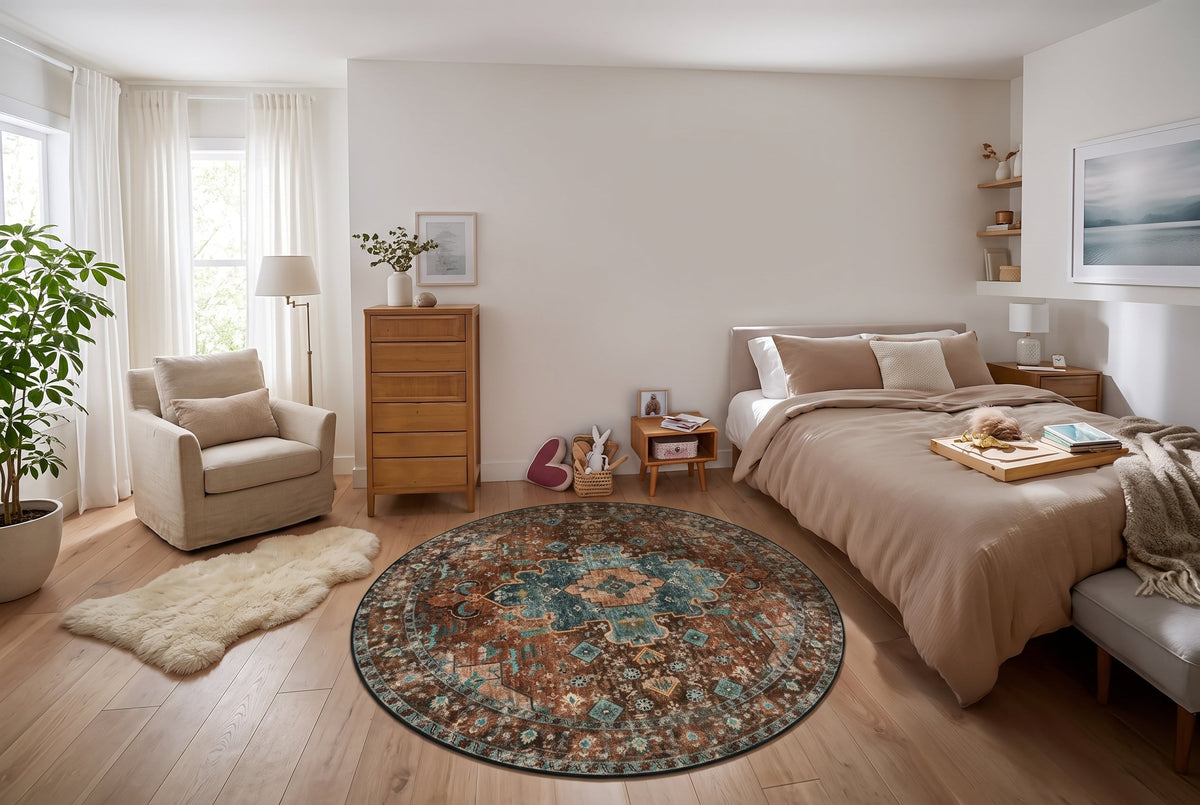
In an era defined by perpetual connectivity and digital stimulation, the bedroom has evolved into something much more than a place to sleep. It is our ultimate recovery cocoon—a private sanctuary where we retreat to disconnect, decompress, and restore our nervous systems. Yet, designing this sanctuary often focuses heavily on bedding and lighting while overlooking the most foundational element of the room: the floor.
When we consider how a room makes us feel, color and touch play an invisible yet profound role in shaping our psychological state. Transforming a bedroom into a true haven of rest begins from the ground up, guided by the soothing power of earthy, low-saturation tones.
The Science of Color: Signaling the Nervous System
The human brain is exquisitely sensitive to visual stimuli. Bright primary colors, stark whites, and harsh neon hues act as subtle activators, keeping the mind alert and engaged. Conversely, organic earth tones—such as warm terracotta, muted clay, understated olive, and soft oat—speak an entirely different visual language.
These low-saturation hues mimic the natural world, signaling to the nervous system that it is safe to wind down. When incorporated into the floor plane, earth tones ground the entire room, absorbing chaotic visual energy and replacing it with a quiet, meditative stability that prepares the body for deep rest.
Tactile Warmth Under Bare Feet
The transition from sleep to waking is a delicate sensory moment. There is a stark physiological difference between stepping out of bed onto a cold, hard wood or tile floor versus a soft, grounding textile.
A cold floor delivers a sharp shock to the senses, jolting the body awake before it is ready. A thoughtfully chosen bedroom rug, by contrast, greets the morning with tactile warmth. It offers a gentle, welcoming buffer that honors the body's need for comfort, turning the first waking steps into a soothing ritual rather than a harsh awakening.
Creating a Unified Rest Space: Positioning for Symmetry
In bedroom styling, proportion and placement are essential to achieving visual harmony. How you position your rug dictates the symmetry and flow of the entire sanctuary:
-
The Full Anchor: Placing a large area rug completely or mostly beneath the bed frame anchors the entire sleeping zone, creating a generous, unified platform that envelops the room in softness.
-
The Side Placements: For more intimate or compact layouts, placing coordinated runner-style rugs alongside the bed ensures that your bare feet are met with warmth on either side, maintaining a balanced and elegant composition. At SERISSA, our vintage-inspired, low-pile collections bring this exact harmony to the bedroom—offering rich, muted storytelling and a stable, non-slip TPE backing that keeps your sanctuary safely in place.
Cultivating Deep Rest Through Ground-Level Design
A truly restful bedroom is the sum of its sensory parts. By embracing the psychological calm of earth tones and the physical comfort of well-engineered floor textures, you invite a deeper quality of peace into your nightly routine.
Your bedroom should be a refuge from the noise of the world. By designing with intention from the ground up, you create a space that doesn't just look serene—it feels like a sanctuary.