

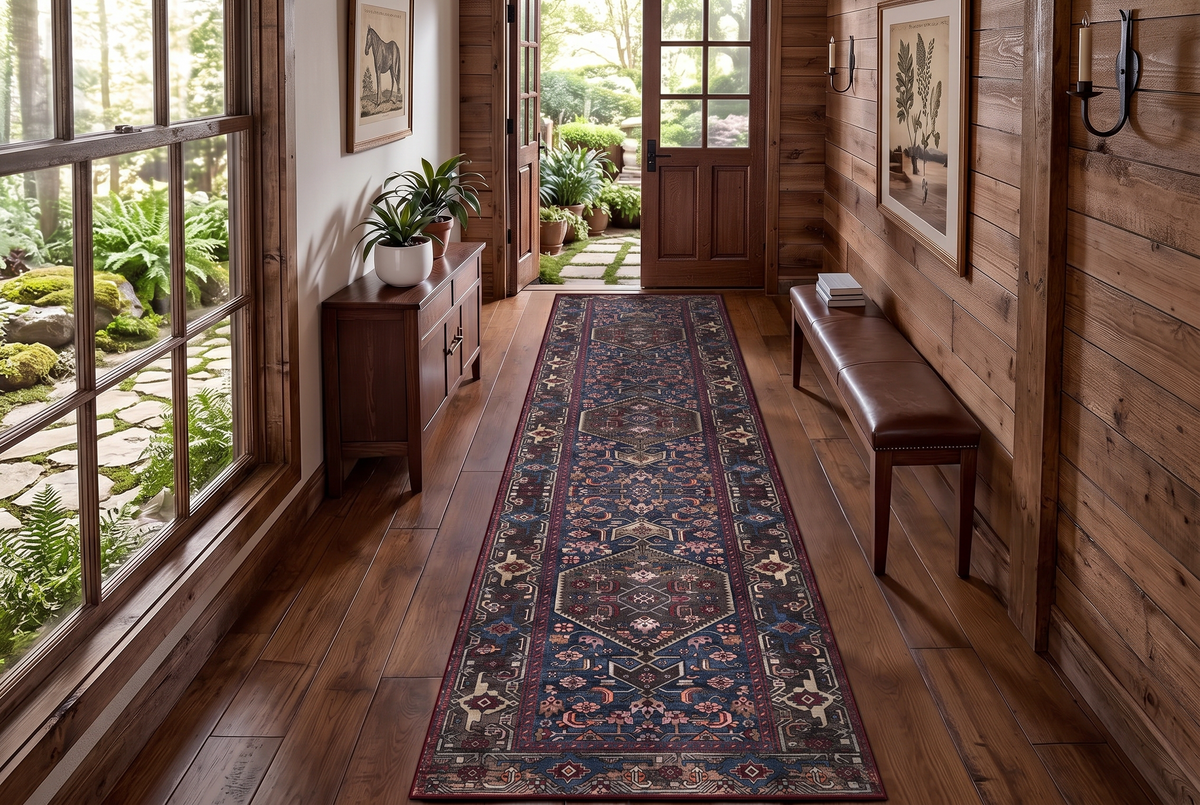
When you enter a room designed by a master interior stylist, the space immediately feels rich, calm, and effortlessly complete. Yet, if you break down the visual elements, the room may not be crowded with decor or filled with loud colors.
The secret lies in an understated designer technique: The Tactile Hierarchy.
Instead of relying solely on visual styling (color and artwork), professional stylists build multi-sensory depth through Material Juxtaposition—the intentional pairing of contrasting raw, smooth, hard, and soft textures. At the foundation of this sensory architecture sits the floor plane, bridging cold furniture surfaces with soft textile warmth.
Rule 1: The Contrast Play (Pairing Opposites)
A room where every element shares a similar finish—such as all-smooth leather, sleek glass, or uniform polished wood—feels sterile. True interior depth emerges from tension between opposing surfaces:
-
Supple Leather vs. Intricate Weaves: Pair a rich leather sectional or armchair with a low-pile vintage rug. The smooth, monolithic patina of leather finds its natural aesthetic counterweight in the fine, intricate yarns and weathered patterns beneath it.
-
Raw Timber vs. Refined Textiles: A reclaimed oak or dark walnut coffee table gains immediate definition when placed over an aged medallion rug. The raw wood grain brings organic structure, while the textile beneath softens its hard edges.
Rule 2: Establishing Visual Weight Across Surfaces
In professional space curation, every material carries a distinct "visual weight":
| Material Element | Visual Weight | Architectural Role |
| Cast Iron / Brass Metalware | Heavy & Crisp | Defines structural accents and light reflection points. |
| Full-Grain Leather & Solid Wood | Grounded & Solid | Provides the core functional architecture of the room. |
| SERISSA Low-Pile Vintage Rug | Balanced & Absorptive | Softens hard shadows, absorbs echo, and anchors the floor plane. |
| Bouclé, Linen & Alpaca Throws | Light & Tactile | Adds micro-layers of intimacy to seating clusters. |
By balancing heavy structural furniture with light-refracting, low-pile floor textiles, you prevent the lower third of your room from feeling visually dense or cluttered.
The Stylist’s Formula: Building the Curated Vignette
To implement tactile hierarchy in your living room, follow this 4-layer composition formula:
-
The Foundation (Base Layer): Position a SERISSA vintage-inspired area rug as the grounding base. Its intricate, faded pattern provides historical depth without competing with your main furniture. Thanks to its integrated TPE non-slip backing, the foundation remains flat and locked to the floor plane.
-
The Anchors (Hard Surfaces): Place your primary seating (leather/velvet sofa) and coffee table (wood/marble/metal) directly onto the rug to structure the conversation zone.
-
The Micro-Layers (Soft Textiles): Drape a textured linen or chunky knit throw over the sofa arm, breaking up the smooth surface of the upholstery.
-
The Accents (Reflective Finishes): Introduce brushed brass candleholders, ceramic vases, or matte black iron lamp bases to reflect warm ambient light down onto the rug surface.
The Final Layer of Luxury: The Poetry of Touch
True luxury in modern residential design is never superficial—it is tactile. When your home engages both sight and touch through deliberate material choices, every interaction becomes an experience of comfort.
By mastering the art of the tactile hierarchy and anchoring your mixed-material space with a beautifully engineered vintage rug, you elevate your home from a decorated room into a deeply curated, multi-sensory sanctuary.