

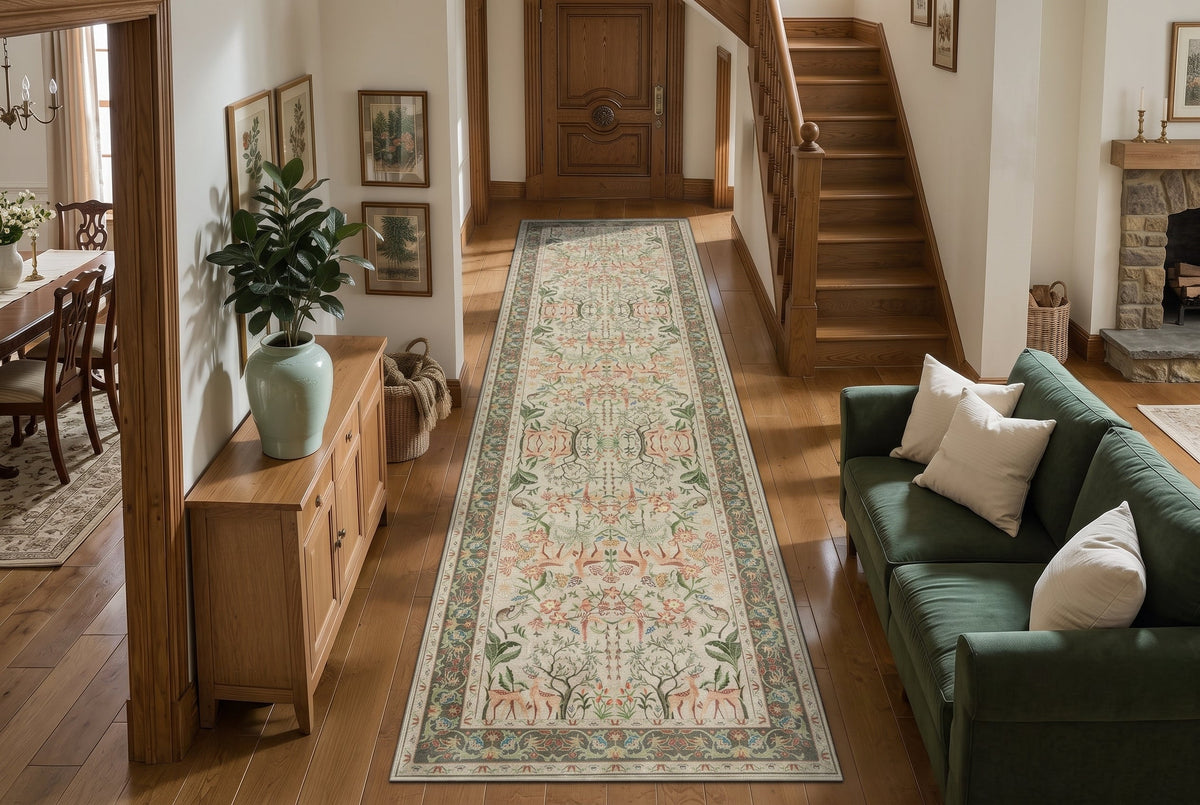
If you have ever purchased a rug online, you know the quiet thrill of unrolling it in your living room. It looks stunning in the photos, matches your color palette, and feels soft under your bare feet.
Yet, three months later, a quiet frustration often sets in. The edges begin to curl upward, the fibers in high-traffic pathways look matted and crushed, and every time you vacuum, it seems to shed an endless cloud of fine dust. If you attempt to wash it, the backing cracks or warps, turning what felt like a stylish decor investment into a disappointing trip to the dumpster.
Why do some rugs fail so drastically while others endure years of daily wear? The answer rarely lies in your cleaning habits. Instead, it is rooted in the hidden manufacturing shortcuts of the "fast-decor" industry.
I. Inside the Trap: The Three Silent Killers of Low-Quality Rugs
To understand why mass-market rugs have such a short lifespan, we have to look behind the glossy marketing and examine the structural compromises made to cut production costs.
-
The Adhesive Trap (Inferior Glues and Backings): In low-end rug production, structural integrity is often sacrificed for speed. Manufacturers frequently rely on cheap synthetic latex or industrial chemical glues to anchor the yarn loops. Under normal room humidity, temperature fluctuations, and daily foot traffic, these substandard adhesives rapidly oxidize, harden, and embrittle. They break down into a fine, microscopic powder—explaining why cheap rugs often start "snowing" dust underneath or curling stubbornly at the corners.
-
The Filament Illusion (Subpar Recycled Fibers): Consumers often judge a rug solely by its initial hand-feel out of the box. However, mass-market producers frequently use low-grade, short-staple recycled fibers. While superficially soft at first touch, these weak filaments lack structural resilience. Under the friction of daily footsteps, they snap, mat down permanently, and trap dirt deep within the core rather than repelling it.
-
The Washing Deception: Many fast-decor pieces are broadly marketed as "washable," yet they fail entirely upon their first encounter with a home washing machine. When exposed to water weight and mechanical spin cycles, unevenly constructed backings warp, shrink, or tear apart because the face fabric and the backing are chemically incompatible.
II. The Solution: How to Spot and Invest in True Durability
True durability is never an accident; it is the direct result of intentional materials engineering. If you want a home textile that endures, you have to look closely at what happens beneath the surface:
-
Advanced Engineering Over Chemical Glues: High-performance textiles replace destructive, degrading glues with stable structural mechanics. For instance, utilizing an advanced TPE (Thermoplastic Elastomer) eco-friendly backing completely transforms the experience. Unlike cheap latex, TPE offers exceptional thermal stability and mechanical resilience. It won't crack or flake, it anchors firmly to floors without chemical residue, and it is chemically stable enough to endure repeated washing cycles without warping.
-
High Filament Density: Instead of weak, short-staple fibers, durable rugs rely on high-density filament structures designed to resist crushing, repel daily wear, and maintain their plush, inviting texture over years of heavy use.
-
The Economics of Longevity: Replacing a cheap rug every few months is neither budget-friendly nor sustainable—it is an unnecessary burden on both your wallet and global landfills. True value and sustainability come from investing in fewer, better items that are built to last.
III. Raising the Standard for What We Buy
Our homes are our personal sanctuaries, and the objects we place inside them should serve us reliably, day in and day out. When you understand the craftsmanship behind fiber construction and backing stability, you stop falling for the trap of disposable decor.
At SERISSA, we believe that true design means never having to choose between aesthetic elegance and effortless daily living. By prioritizing thoughtful engineering, non-slip performance, and lasting resilience, we invite you to let your home feature textiles that are genuinely built to endure.
We’d love to hear your thoughts: Have you ever had a rug "fail" on you unexpectedly? What do you look for when shopping for home textiles? Let us know in the comments below!