

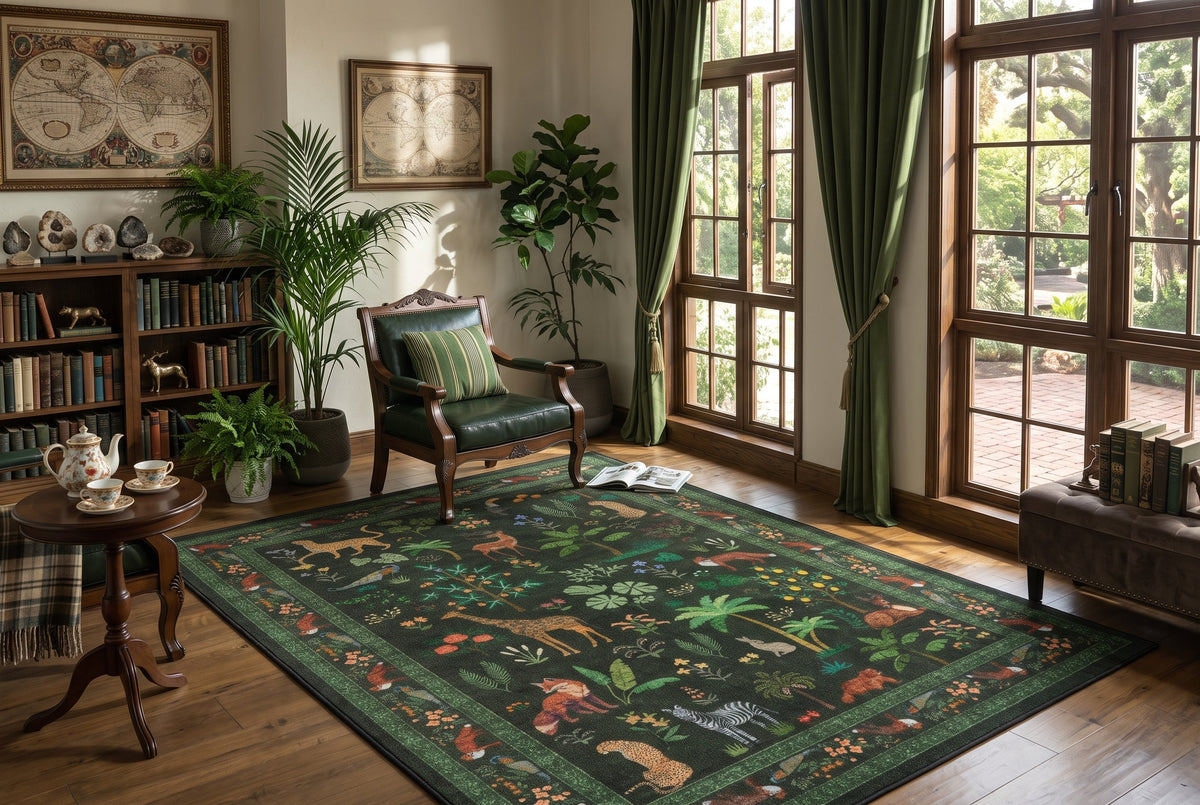
We often think of interior design as a purely visual pursuit—a matter of calibrated color palettes, carefully angled light, and architectural geometry. Yet, the most profound impact a home has on our well-being is felt not through our eyes, but beneath our feet.
There is a specific, almost sacred micro-moment at the end of a long day: the pause at the entryway, the shedding of shoes, and the first physical contact with the interior ground. In that silent transition, the body undergoes a profound neurological shift. It is the exact second we stop performing for the outside world and begin to inhabit ourselves.
The Psychology of the "Soft Landing"
Modern environments—marked by unyielding hard surfaces, urban noise, and constant digital vigilance—keep our nervous systems in a state of low-level, chronic tension. When we return home, our bodies crave an immediate physiological antidote to this friction.
Environmental psychology suggests that "softness" in a space is not merely a matter of physical comfort; it is a vital biological cue. When your bare feet encounter a plush, high-quality surface, it signals safety to the brain. The shoulders instinctively drop, the breath deepens, and the rapid pace of the day begins to slow. It is the tangible threshold where stress gives way to restoration, lowering internal tension through touch alone.
The Sensory Architecture of a Room
Why does the sensation of softness feel so essential to our peace of mind? It is rooted in our primal need for emotional grounding.
A space defined solely by hard surfaces—wood, tile, or polished stone—can be visually striking, but it often lacks a sensory anchor. Hard floors amplify acoustic harshness, turning the echoes of movement into a subtle, subconscious unease. A well-placed rug acts as a soft-focus lens for the room, absorbing ambient vibrations and turning environmental echoes into an intimate, velvet-like silence. This tactile layer transforms a house from an exhibition space into a true sanctuary.
The Engineering of Bare-Foot Comfort
True luxury in home design should never feel intimidating or fragile; it should invite effortless interaction.
At SERISSA, we approach texture as a bridge between high-end aesthetics and daily reality. We utilize high-quality, plush polyester fibers designed to be explicitly "bare-foot friendly"—offering a luxurious, nearly plush experience without the coarseness or maintenance anxiety of traditional textiles.
Furthermore, true relaxation requires absolute physical stability. Nothing shatters a moment of calm quite like a shifting, bunching rug. By incorporating a precision-engineered TPE non-slip backing, our designs anchor themselves securely to the floor, eliminating the micro-anxieties of everyday movement. Combined with a low-pile construction that resists wear and a machine-washable resilience, our rugs are engineered to handle the unpredictability of daily life without compromising their sophisticated look and feel.
Cultivating the Ritual of Return
Your home is the only space in the world where you are entirely, authentically yourself. It should be intentionally curated to honor that state.
Consider your living space not merely as a collection of furniture, but as an active landscape for emotional recovery. By introducing textures that invite you to slow down, you are doing more than decorating—you are designing a ritual of return.
Tonight, when you cross your threshold and slip off your shoes, pause for a fraction of a second. Notice how the ground beneath you receives your weight. That quiet friction between foot and fiber is the boundary of your sanctuary. It is the precise moment the noise of the day ends, and the life you have carefully cultivated begins.