

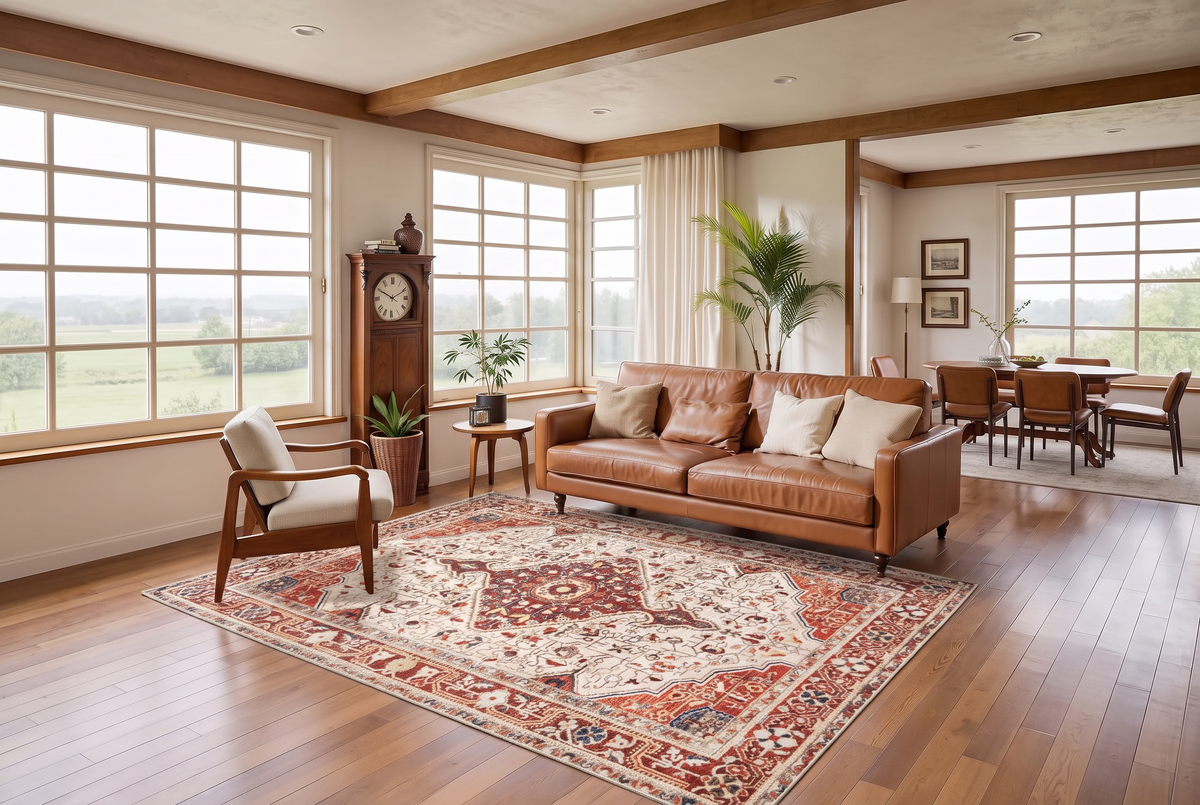
In contemporary architecture, the celebration of openness is a defining signature. We gravitate toward expansive, fluid floor plans, shared family spaces, and windows that invite endless light. Yet, total openness can sometimes border on the formless—a vast expanse that feels visually chaotic or emotionally ungrounded.
When a room lacks definition, it lacks intimacy. But how do we introduce order and purpose into a large, open space without resorting to rigid walls or physical barriers that compromise light and air?
The answer lies not in vertical construction, but horizontally, beneath our feet. A rug is much more than a functional floor covering; it is a profound architectural tool for psychological zoning.
The Psychology of Spatial Zoning
Human psychology relies heavily on environmental cues to feel secure and centered. In a completely open environment, the brain struggles to anchor itself, constantly scanning a wide, unbounded field.
When you introduce a defined area on the floor, you create a subconscious sense of purpose and psychological safety. The eye naturally reads shifts in texture, pattern, and grounding as boundaries. By mapping out the floor, you eliminate the need for physical partitions, allowing air and light to circulate freely while creating distinct emotional territories within a single room.
Zone One: The Living Room as the Social Anchor
The living room is where the house breathes together—a space dedicated to conversation, gathering, and shared relaxation. In an open-concept layout, this zone requires a strong visual center of gravity.
-
The Gravity of Scale: A well-scaled, substantial rug acts as an anchor that pulls floating furniture—sofas, armchairs, and coffee tables—into a cohesive conversation pit.
-
The Art of Placement: By ensuring at least the front legs of your seating rest upon the rug, you visually bind the independent pieces into a unified whole. This subtle framing separates the social zone from surrounding pathways, giving the living area an intentional and welcoming boundary.
Zone Two: The Reading Nook as a Sanctuary of Solitude
In stark contrast to the open, social energy of the living room, a reading corner demands intimacy, quietude, and a sense of retreat.
-
Carving Out Silence: Here, a smaller, distinct rug can carve out a "room within a room." It signals a radical shift in atmosphere, turning a forgotten corner into a deliberate destination.
-
The Sensory Shift: Pairing an inviting armchair and a directional floor lamp with a tactile, low-pile rug creates a psychological transition. It tells the mind that this specific micro-environment is dedicated entirely to introspection, reading, and solitude.
The Art of Coexistence: Harmonizing Adjacent Zones
Placing multiple rugs within the same open-concept floor plan requires a curatorial eye to avoid visual competition. The goal is harmony, not fragmentation.
-
Visual Rhythm: Maintain a dialogue between adjacent zones through complementary palettes or restrained patterns. For instance, pairing a statement vintage-inspired rug in the main living space with a subtle, textured accent rug in a nearby reading nook creates continuity.
-
The Flow of Material: When the textures speak the same design language, the transition from one zone to another feels effortless, guiding the eye smoothly across the landscape of the home.
Function Meets Form: Practical Elegance in Zoning
In high-traffic transitional spaces, structural integrity is just as important as aesthetics. A rug that shifts, bunches, or slips breaks the illusion of order and introduces unnecessary friction into daily life.
At SERISSA, we believe that structural reliability is the silent partner of good design. By utilizing precision-engineered TPE non-slip backings and durable, low-pile polyester constructions, our rugs remain flawlessly anchored to the floor. This ensures that your psychological zones stay secure, stable, and effortlessly manageable, allowing you to enjoy the beauty of an open-concept home without the constant maintenance anxiety.
Living with Intention
True spatial design is never about building walls; it is about creating flow with intention.
When you use rugs to map out the geography of your home, you are designing more than just the layout—you are curating how you feel within your space. Every zone becomes a chapter in your daily narrative, balancing the openness of modern architecture with the grounding comfort of a well-ordered life.